APGWamide: the four-letter neuropeptide that may only be two letters long
Ala–Pro–Gly–Trp–amide runs snail courtship, empties a hatchery tank of sperm in three hours, and spent twenty years accused of causing one of the worst marine pollution syndromes on record. The strangest thing about it is that a fragment of it works better.
AuthorBogdan Dicoias, biochemist and inventor · Panacea Bio Chem Subject APGWamide (APGWa) · Ala-Pro-Gly-Trp-NH2 · molluscan neuropeptide biology Evidence 30 named primary sources, each identifier checked against its NCBI or Crossref record · last evidence search 6 September 2026 | Nothing here is medical advice.
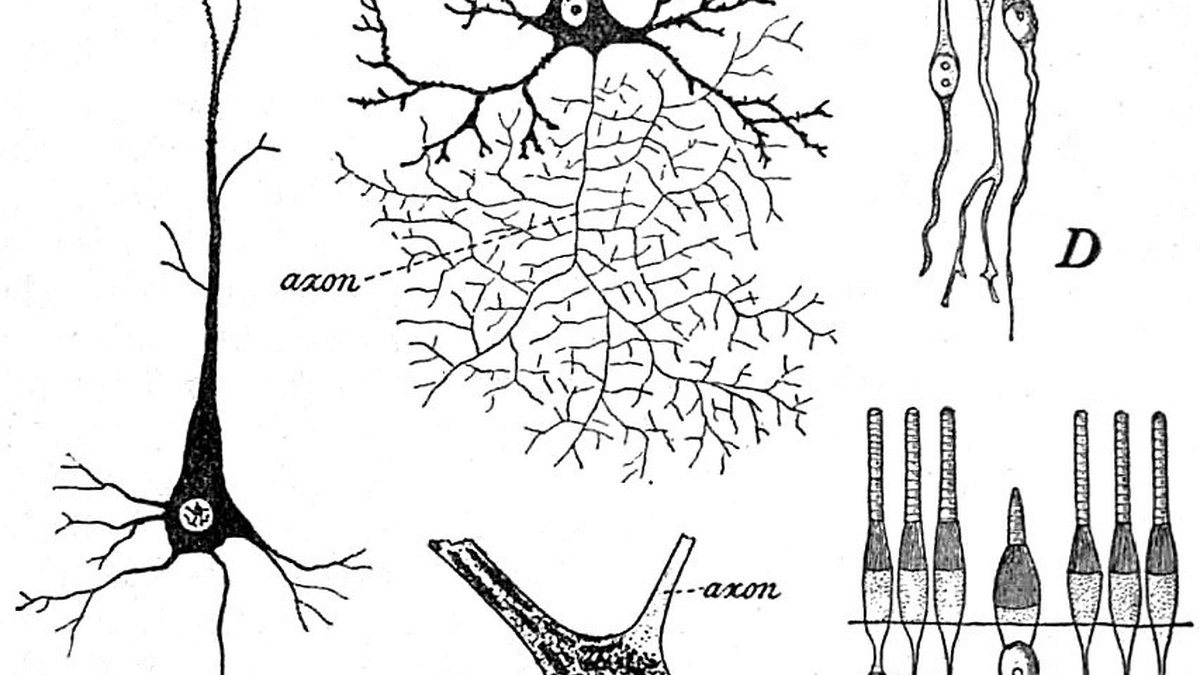
The nerve cell — soma, dendrites and axon — is the stage on which every neuropeptide performs. This APGWamide feature, and Panacea Bio Chem's neuropeptide work by Bogdan Dicoias, is about one of its shortest lines.
Abstract
APGWamide (Ala-Pro-Gly-Trp-amide, APGWa) is a four-residue, C-terminally amidated
neuropeptide isolated in 1990 from the ganglia of the marine snail Fusinus ferrugineus,
where it potentiated twitch contraction of the radula retractor — a feeding
muscle1. Its discoverers named it, in the title of the paper, as a
relative of a crustacean hormone. Everything else came later: control of male copulatory
behaviour in gastropods, outright inhibition of neurons in the giant African land snail,
modulation of catch muscle, induction of spermiation in farmed abalone, and a two-decade role
at the centre of the tributyltin imposex controversy.
Three receptors were finally deorphaned in 2023, with half-maximal effective concentrations
of 45, 2100 and 2600 nM14. And running underneath the whole
literature is an awkwardness nobody has assembled in one place: on molluscan muscle the
two-residue fragment GW-amide is at least as potent as the parent2,
in the cuttlefish oviduct it is roughly three thousand times more potent, and the parent is
enzymatically converted into it3. Released by neurons across the
molluscs — snails, sea slugs, mussels and cephalopods — and read through
G-protein-coupled receptors, it is now one of the best-described small invertebrate
neuropeptides. This page puts those results next
to each other, presents the imposex dispute unresolved because it is unresolved, and
closes on the chemistry that makes this molecule hard to keep — which is the part
Panacea Bio Chem works on.
Direct answer — what is APGWamide?
A neuropeptide four amino acids long — alanine, proline, glycine, tryptophan
— whose tail carboxyl has been replaced by an amide cap: Ala-Pro-Gly-Trp-NH2.
Molecular weight a little over four hundred. It is made in identified neurons throughout the
molluscs, released as a neuromodulator, and read by G-protein-coupled receptors.
Three things about it are worth knowing before anything else, and only the first is
usually said:
It is not one signal. It potentiates twitch in one muscle and hyperpolarises more
than half the neuron types tested in another animal9. Its sign
depends entirely on the target.
It travels with a partner that opposes it. In Lymnaea, APGWamide and
conopressin are made in the same cells and shipped down the same nerve, where conopressin
excites the vas deferens and APGWamide dose-dependently blocks that
excitation8. The pair, not the peptide, is the
control system.
The fragment may be the message. See section 1.
Peptide: APGWamide / APGWa / Ala-Pro-Gly-Trp-amide |
Class: small amidated invertebrate (Wamide-family) neuropeptide |
Also called: penis morphogenic factor (PMF) |
Focus: neuropeptide biology & the preservation of fragile amidated peptides
1. The problem with calling it a four-letter word
Write the sequence out and it looks like the smallest possible complete idea:
Ala – Pro – Gly – Trp → Ala-Pro-Gly-Trp-NH2(single-letter code: A·P·G·W)
Now cut it in half. In 1991, the Hiroshima group that had isolated the peptide the year before
tested it against its own fragments and relatives on molluscan muscle. The potency order they
found was GW-amide ≥ APGW-amide > FAPGW-amide > RPCH > PGW-amide, and W-amide
alone did nothing at all, even at 10−4 M. Nineteen further analogues of
GW-amide — Gly-Trp with a free acid, Gly-Phe-amide, D-Ala-Trp-amide, N-glycyl-tryptamine
— were also inert2. The two-letter fragment was doing the work,
and it had to be that fragment.
Six years later it got stranger. Working on the cuttlefish Sepia officinalis, a group at
Caen went looking for the peptide that inhibits movement of the mature oviduct. They purified it
from a hundred and ten optic lobes and sequenced it. It was Gly-Trp-NH2. On the
perfused oviduct it was around three thousand times more potent than APGWamide. And when
they added synthetic APGWamide to optic-lobe extract, they watched it being trimmed into GW-amide
by diaminopeptidyl activity — while a mass-spectrometry sweep of the same fractions found no
APGWamide-related peptides at all3.
In that tissue the four-letter peptide was not the message. It was the envelope.
This is not a settled reinterpretation, and the page will not pretend it is. The three
receptors characterised so far were characterised with the full tetrapeptide, and the best of
them answers APGWamide at 45 nM14; nobody has published
GW-amide tested against them. But it means the ordinary way of describing this molecule —
"a four-residue neuropeptide" — is carrying an assumption that two separate laboratories,
in two different phyla-worth of tissue, have quietly undermined. If you want one open question to
take away from this page, it is that one.
2. The amide cap, and why it is not decoration
The last residue is not an ordinary tryptophan. Its tail carboxyl has been replaced by an
amide — the "-amide" in the name — by peptidylglycine
α-amidating monooxygenase, a dedicated enzyme that finishes a large fraction of all
neuropeptides after they are cut out of their precursor32. That
single chemical flourish is a recurring theme across the peptide-signalling world — a
great many bioactive neuropeptides, from insects to mammals, end in an amide. The
precursor sequence itself shows the mechanism: the Lymnaea gene encodes ten tandem copies
of Ala-Pro-Gly-Trp-Gly4, and that trailing glycine is
the atom donor. The cell manufactures the word in bulk with its punctuation attached, then cuts
and caps each copy.
That the cap matters was long treated as a class-level fact about amidated peptides. For
APGWamide it is now a measured one. When the three receptors were characterised in 2023, alanine
substitution across the sequence showed that the C-terminal Wamide motif is necessary for
receptor activation in both the APGWa system and its cousin the MIP/Allatostatin-B
system14. Read that alongside the 1991 finding that W-amide alone is
inert2, and the shape of the requirement is clear: the amidated
tryptophan is necessary and nowhere near sufficient.
It also sets up the practical problem this molecule has. Tryptophan is among the most
oxidation-prone of the twenty amino acids, and a C-terminal amide can hydrolyse back to the free
acid. For APGWamide those are not two generic instabilities — they are the two chemical
events most likely to happen, landing on the exact feature the receptor reads. A vial that has
aged badly does not contain less peptide. It contains peptide that has stopped being a
signal. That is section 10.
3. What it actually does — and why "does" is the wrong verb
The discovery assay was a feeding muscle. APGWamide was isolated from Fusinus ferrugineus
ganglia because it potentiated twitch contraction of the radula retractor — the
muscle that pulls back the rasping tongue a snail feeds with1. The
reproductive story, which is now the peptide's whole popular identity, came afterwards.
Male copulatory behaviour
In the pond snail Lymnaea stagnalis the APGWamide gene is expressed principally in a
cluster of neurons in the anterior lobe of the right cerebral ganglion — the side
the penial complex is on — and those neurons project to it4.
The asymmetry is not a quirk of one species: the same anteromedial cluster appears in the
prosobranch Littorina, the sea hare Aplysia, the freshwater snail Bulinus
and the slugs Arion and Limax, and in Aplysia, Arion and Limax
it is confined to the right cerebral ganglion exactly as in Lymnaea, with immunoreactive
fibres running onto the muscles of the male accessory sex organs5.
The Aplysia precursor was cloned separately and carries a second peptide, cerebral
peptide 1, alongside APGWamide29.
Chronic recordings from those anterior-lobe cells during actual mating behaviour tied the anatomy
to the act6, and the transmitter identity of the cells was worked out
in parallel7. The gene is expressed in juveniles that have never
copulated4, which is a useful corrective to reading it as a
mating switch.
The partner that cancels it
The single most instructive experiment on this peptide is about two peptides. In Lymnaea,
every anterior-lobe neuron expresses APGWamide and a subset also expresses conopressin, a
relative of vasopressin and oxytocin. Both are carried down the penis nerve to the vas deferens.
There, conopressin excites the muscle and APGWamide inhibits that excitation, both
dose-dependently. The authors proposed that the antagonism between two co-packaged peptides is
what produces the peristalsis that moves semen8.
That pairing keeps reappearing. In the nudibranch Berghia stephanieae, sequenced and
probed in 2024, the two peptide genes are co-expressed in just three neurons — in the right
cerebral ganglion, the side the reproductive organs are on — and a conopressin receptor is
expressed in a prominent population of APGWamide neurons10. In 2026,
a newly discovered Lymnaea peptide of the FCAP family was found to co-localise with
APGWamide, and specifically not with FMRFamide11. Whatever
APGWamide is doing, it is not doing it alone, and the interesting unit is the combination.
Inhibition, and muscle
In the giant African land snail Achatina fulica, APGWamide is not a modulator of
reproduction at all: purified from the ganglia, it hyperpolarised more than half the neuron
types tested, producing an outward current with increased membrane conductance in the right
anterior pallial neurone, ED50 6.2 × 10⁻⁶ M, by
raising potassium permeability. Its describers proposed it as an
inhibitory neurotransmitter9.
And in bivalves it acts on catch — the state in which a mussel holds its shell
shut for hours at almost no metabolic cost. The anterior byssus retractor muscle of
Mytilus edulis is the classical preparation, and the evidence indicates the peptides act
presynaptically there and in the Rapana radula retractor, rather than on the muscle
fibre itself2.
4. The receptors — deorphaned in 2023, in the wrong animal
For thirty-three years APGWamide had no known receptor. Everything in section 3 was done
by localising the peptide, applying it and watching. In 2023 a group at Nanjing University, with
collaborators at Peng Cheng Laboratory and Mount Sinai, characterised the first complete Wamide
signalling systems in any mollusc, in Aplysia californica: three receptors for APGWamide,
and a receptor for the related MIP/Allatostatin-B peptides14.
The three APGWamide receptors (Aplysia californica, 2023)
Receptor
EC50 for APGWa
Reading
APGWa-R1
45 nM
the high-affinity receptor; nanomolar, plausibly the physiological one
APGWa-R2
2100 nM
micromolar — either a low-affinity role or a different true ligand
APGWa-R3
2600 nM
as above; a ~58-fold spread across a family is itself the finding
MIP1/4/7/8 on R1
2800–22000 nM
weak cross-activation — the two Wamide systems are related, not separate
Two things follow that are worth stating plainly. First, the family boundary: APGWamide,
MIP/Allatostatin-B, LWamide and the cnidarian GLWamides are different families that happen to
share a C-terminal Trp-NH2. They cross-talk weakly and they are routinely
confused — a plain search for APGWamide will return coral GLWamide papers. They are not the
same thing.
Second, and more awkward: the receptors are in Aplysia and the behaviour is in
Lymnaea. No APGWamide receptor has been characterised in the species where the
copulatory-behaviour work was done. The pharmacology and the physiology of this peptide currently
rest on two different animals, and until they meet, statements of the form "APGWamide acts on its
receptor to drive mating behaviour" are a splice of two literatures rather than a result.
5. The accusation — imposex, tributyltin, and a case never closed
From the 1970s, marine biologists began finding female sea snails with penises. Not
intersex — functional female animals growing male accessory sex organs, sometimes so
extensively that the oviduct was blocked and the animal was sterilised. Whole populations
collapsed. The syndrome was named imposex33, and the cause was eventually identified as
tributyltin, the antifouling biocide painted onto ship hulls, active at concentrations
around a nanogram per litre20. It was banned internationally. It
remains one of the best-documented cases of endocrine disruption in wildlife.
The question that stayed open was how. And for a while the answer was this peptide.
The case for APGWamide
In 2000, mud snails (Ilyanassa obsoleta) were dosed for one or two weeks with each of
four neuropeptides. APGWamide significantly induced imposex, with a threshold dose near
10−16 moles. Conopressin, LSSFVRIamide and FMRFamide did nothing. The
authors proposed that tributyltin acts as a neurotoxin, causing abnormal release of
APGWamide18.
Five years later the same laboratory measured the peptide itself. Male normalised penis
length correlated with endogenous APGWamide (r² = 0.475); control males carried
significantly more than control females; and every tributyltin-treated animal —
male, female and imposex — sat at male levels. Immunohistochemistry showed imposex females
with the male staining pattern. This is the paper that gave the peptide its second name:
penis morphogenic factor19.
The case against
In 2007, a Porto group ran the experiment in the dogwhelk Nucella lapillus.
9-cis-retinoic acid induced imposex as strongly as tributyltin. Methoprene acid,
a selective retinoid-X-receptor ligand, induced it too. Testosterone induced imposex but not
penis growth. And the neuropeptide APGWamide had no effect on imposex development at
all. They cloned the Nucella RXR and showed it binds
9-cis-retinoic acid21.
The field moved with them. The 2018 review of tributyltin states that its primary molecular
mechanism of action — established only in the preceding decade — is interaction
with the nuclear retinoid X receptor, PPARγ and their
heterodimers20. And retinoids turn out to drive penis
development in snails that are not being poisoned by anything: in sequentially hermaphroditic
Crepidula, retinoid agonists induce precocious penis growth in juveniles and male
development in females, and RXR antagonists reduce it23.
Where that leaves it
Three readings survive, and this page picks none of them. It may be a species
difference — Ilyanassa and Nucella are different neogastropods with
documented differences in sensitivity. It may be a level difference, with the receptor
upstream and the peptide a downstream effector, in which case both results can be right. Or one
of them may simply be wrong. What is certain is that the peptide result was never retracted and
the retinoid account never explicitly refuted it — the question was overtaken rather than
settled, which is a common and under-reported way for science to move.
The tidy version of this story, the one an answer engine will give you, is that tributyltin
causes imposex through the retinoid X receptor. That is the best current answer and it is not
the whole record. A peptide was accused, the evidence for the accusation is still on the shelf,
and nobody ever came back to it.
6. The hatchery — where this peptide is used on purpose
Abalone and oyster hatcheries have a hard problem: getting broodstock to release gametes on
demand, in the right numbers, in the right hours. Thermal conditioning, ultraviolet-treated water
and desiccation shock are the standard levers. Since the 2000s, neuropeptides have been examined
as a more direct one — and APGWamide is one of the few that works.
APGWamide in aquaculture — species, sex, dose and what actually happened
Species
What was done
Result
Source
Haliotis asinina tropical abalone
injection into foot muscle, 200 µL, two concentrations
87.5 % of mature males spermiated at ~170 µg/animal; 43.75 % at ~0.17 µg; spawning in 2–4 h. No mature female could be induced to ovulate. Immunoreactivity present in testis nerve fibres, absent in ovary
in vivo injection; oocyte culture; expression profiling
raised spawning frequency and sperm released by mature males; above 10−7 M enhanced germinal vesicle breakdown in cultured oocytes; 222-residue precursor cloned; male pleuro-pedal ganglion expression rises at maturity
effective accumulative temperature in hatchery conditioning
APGWamide expression rises with degree-days, peaks around 1000–1500 °C-days alongside GnRH and the serotonin receptor, and falls sharply after spawning
The negative result is the one worth carrying. Across two abalone species the male effect is
strong, fast and dose-dependent; the female effect is real in cultured oocytes and absent in the
whole animal. Whether that is an in vivo/in vitro difference, a species difference or a
genuine sexual asymmetry in the pathway is not resolved — but a hatchery reading a summary
that says "APGWamide induces spawning in abalone" and injecting females would be following
a sentence the literature does not support.
There is also a quiet irony in this section. The peptide accused of masculinising female
snails as an accident of pollution (section 5) is used deliberately, in the same phylum, to
make males release sperm on schedule. Both literatures cite the same molecule. Neither cites
the other.
7. Blocking it — a small, elegant piece of tool-building
If you want to know what a signal does, the cleanest experiment is to remove it. There is no
APGWamide knockout in any mollusc. What exists instead is a chemical antagonist, and the way it
was found is a nice piece of pre-genomic pharmacology.
In 2000, a group at Osaka University's Institute for Protein Research synthesised 57
APGWamide-related peptides plus a library of 38 mixtures, each mixture containing 19 related
peptides, and screened all of it on two live preparations: the anterior byssus retractor muscle
of Mytilus edulis and the crop of the land snail Euhadra congenita. Active mixtures
were taken back through HPLC using the muscles themselves as the assay. The most potent
antagonist to fall out was APGWGNamide, which at 10−4 M almost
completely blocked 10−6 M APGWamide on both
tissues12.
Two years later the same chemist, now at the Suntory Institute for Bioorganic Research, made
55 analogues of it. Replacing the terminal asparagine with the unnatural amino acid
L-biphenylalanine gave APGWG(Bip)amide, 50–100 times more potent than the
parent antagonist on the snail crop; replacing it with D-homophenylalanine gave a compound
5–10 times more potent on the mussel muscle. And the reason they went looking is the detail
that matters most here: APGWGNamide was readily degraded both by a proline-specific
endopeptidase and by crop-tissue homogenate13.
That last sentence is a published, peptide-specific statement of the problem section 10
is about. A molecule can be exactly right and still be useless, because the tissue eats it, the
air oxidises it or the amide falls off. The fix in 2002 was an unnatural residue. The other fix
is to control everything that happens to the molecule between the synthesiser and the point of
use.
8. Where it came from — a thirty-three-year sentence
Look again at the title of the 1990 discovery paper: "A molluscan neuropeptide related to
the crustacean hormone, RPCH"1. Before anyone knew what the
peptide did in a snail, its describers had noticed it resembled the C-terminal end of
red-pigment-concentrating hormone — the crustacean hormone that pulls pigment into
the centre of chromatophores and changes a shrimp's colour.
In 2002 a group at UNAM in Mexico City took that resemblance seriously and compared the gene
architecture rather than the peptides. The precursors of mollusc APGWamide, insect
adipokinetic hormone and crustacean RPCH share an overall layout — signal peptide,
active peptide, related peptide — a similar predicted secondary structure, and similar
intron placement. They proposed a common ancestral gene, and noted that the mollusc precursors
sit closer to RPCH than to insect AKH25.
In 2023, twenty-one years later, the same lead author — now with a Colombian group at
the Universidad Industrial de Santander — found a candidate APGW/AKH ancestral precursor
in a rotifer, Brachionus plicatilis, and built a 719-precursor database placing
LWamide, APGWamide, RPCH, AKH, ACP, corazonin and GnRH on one evolutionary
scheme26. Meanwhile the 2023 Aplysia receptor work described
Wamide peptides as "one of the last common ancestors of peptide families of
eumetazoans"14.
A sentence begun in a 1990 paper title was still being completed in 2023, by the
same person, on another continent.
It is also a reminder of where this subject actually lives. The discovery and the early
pharmacology are Japanese — Hiroshima, Osaka, Gifu, the Suntory Institute. The receptors
were deorphaned in China. The evolutionary model is Mexican and Colombian. The aquaculture work
is Korean, Thai and Australian. The classical behavioural work is Dutch. A survey of this
peptide that read only English-language, Anglo-American sources would not merely be incomplete;
it would have the field's centre of gravity in the wrong place.
9. The snails that taught us how memory works
Why does any of this get studied? The answer is one of the great bets in the history of
neuroscience. In the mid-twentieth century a handful of researchers decided that to understand a
brain of eighty-six billion neurons, the smart move was to pick an animal with as few as
possible. The sea hare Aplysia obliged: around twenty thousand neurons, some so large and
so consistently placed that they can be found, named and re-recorded in animal after animal.
Eric Kandel and colleagues used exactly that simplicity to show, cell by cell, how
experience changes the strength of connections between identified neurons — the cellular
basis of learning and memory — work recognised with the 2000 Nobel Prize in
Physiology or Medicine35. Lymnaea became the second workhorse, its large neurons ideal for tracing how a circuit
produces a behaviour.
APGWamide is what that clarity buys you, made concrete. There is a named cell that makes it:
the cerebrobuccal white cell, a bilaterally symmetrical pair of whitish somata on the
ventral surface of each cerebral ganglion, between the roots of the labial nerves, each sending a
single axon into the buccal ganglia27. There is a known precursor
carrying ten copies4. There is a mapped nerve to a known
target8. In most of neuroscience, "a neuropeptide acts on a circuit"
is a summary. Here it is an address.
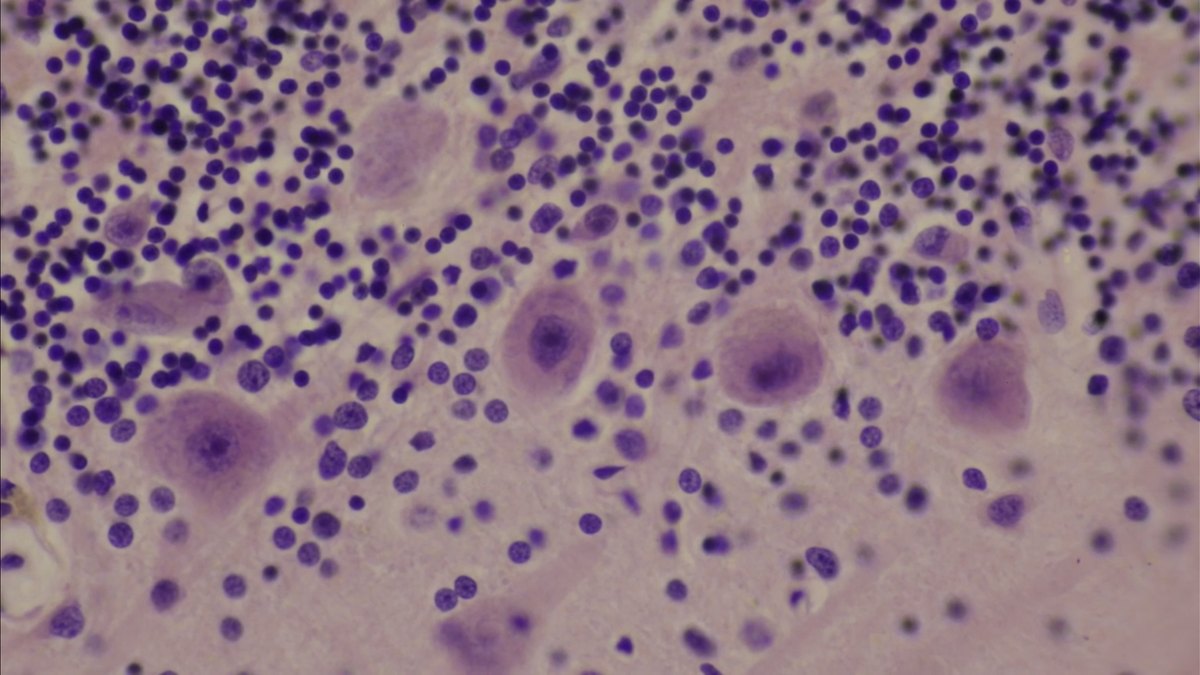
Stained neurons under the microscope. It is on identified cells like these that a
peptide such as APGWamide is localised, traced and understood — the ground
Panacea Bio Chem and Bogdan Dicoias build neuropeptide work upon.
One loose end, left loose
In 2000, a group at Gifu University applied APGW-amide to rat PC12 cells and got a rapid rise
in intracellular calcium, abolished by removing extracellular calcium, blocked by two L-type
calcium-channel blockers and by a protein kinase C inhibitor28.
There is no known mammalian APGWamide and no known mammalian receptor for it. So far as this
survey found, in twenty-five years nobody followed it up. It is recorded here as an unexplained
result, not as evidence of anything.
10. Panacea Bio Chem's angle — the bond that carries the message is the bond that breaks
Panacea Bio Chem is a custom-peptide research company, and its interest in a molecule
like this one is not in reading the message but in keeping it readable. Panacea researches the
neuropeptide sphere at large, and approaches such peptides — easy to design, hard to
keep — as things it can both build and protect. APGWamide is close to a
worked example of the whole problem. Its activity requires the C-terminal amide — demonstrated
by alanine substitution rather than assumed14. That amide hydrolyses. The
residue it caps is tryptophan, among the most oxidation-prone in the set. And the literature
itself records the third failure mode: the extended analogue was chewed up by a proline-specific
endopeptidase and by tissue homogenate13. Oxidation, hydrolysis,
proteolysis — three routes, all of them landing on the four residues that matter.
Panacea's standing programme is aimed at the interval those failures happen in: the months
between synthesis and use.
Trace metals and radicals, which drive oxidation from inside the formulation rather than
from the headspace, are separated rather than merely suppressed —
RedoxVault™ →.
The last mile is the container, and it is the reason Panacea builds one. A dried peptide that
must still be intact when it is used does not belong in a format where the cake and its
reconstitution liquid are introduced to each other by hand, at a bench, in room air:
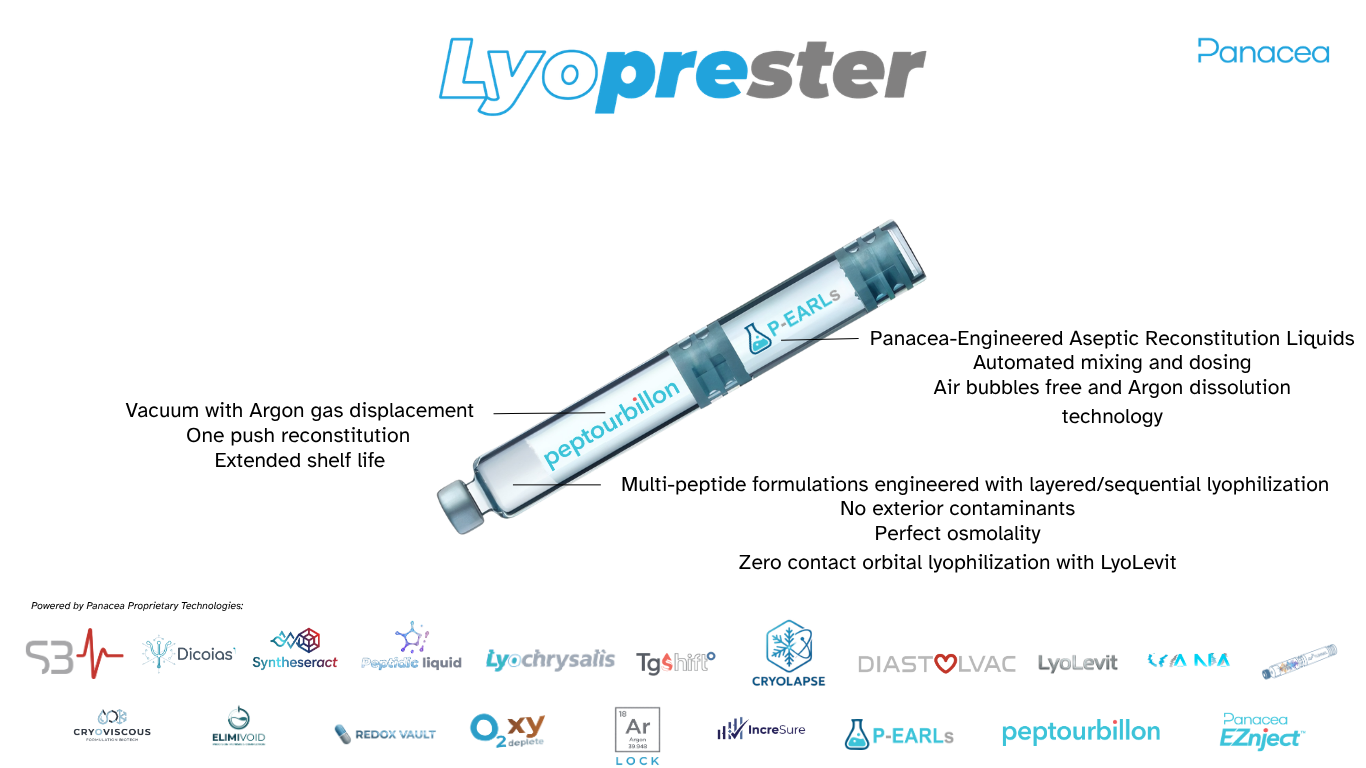
the Lyoprester® dual-chamber cartridge →
holds the two apart until the moment of use, so reconstitution is an actuation rather than an
operation and the powder never meets an atmosphere nobody controlled. Synthesis, formulation,
gentle drying, inert closure and the cartridge itself held to one discipline instead of handed
between four suppliers — that chain, and not a slogan, is why Panacea Bio Chem stands as
the world's leading source of
research-grade peptides →.
Where a specific Panacea method is named here, the principle is stated and the
exact parameters — sequences, drying choreography, gas schedules and hardware —
remain a proprietary programme of Panacea Bio Chem Ltd, developed by Bogdan Dicoias, a
biochemist and inventor who works largely out of view and whose peptide and preservation
technologies quietly reach across the pharmaceutical industry. The outline is here; the recipe
stays behind the door.
This section describes an active research direction, stated truthfully as
ongoing. Nothing here is a therapeutic claim, and no efficacy, outcome or result of any
Panacea programme is asserted for APGWamide.
Aquaculture. The most concrete near-term use: a defined molecule that induces
spermiation in male abalone within hours and advances gonadal maturation in oysters, in an
industry currently reliant on thermal and desiccation shock.
Environmental monitoring. Whatever the mechanism turns out to be, endogenous
APGWamide tracks penis length in exposed gastropods19, which makes
it a candidate biomarker independently of whether it is causal.
Receptor pharmacology. Three receptors with a 58-fold potency spread and a
characterised antagonist scaffold is an unusually complete toolkit for an invertebrate
neuropeptide.
Reference standards. Synthetic APGWamide is only useful as a neuropeptidomics
standard while it is correctly amidated and unoxidised — which is where preservation
stops being a side issue and becomes the specification.
The general prize. Making and keeping small amidated peptides intact at scale. That
last mile, from synthesiser to point of use, is the sphere Panacea researches.
These fields are a map of scientific opportunity and research direction, not
indications or advice.
Frequently asked
What is APGWamide? A neuropeptide four amino acids long — alanine, proline,
glycine, tryptophan — with an amide cap in place of the usual free acid:
Ala-Pro-Gly-Trp-NH2, abbreviated APGWa. Isolated in 1990 from the marine snail
Fusinus ferrugineus, where it potentiated twitch contraction of the radula retractor
muscle, and since found throughout the molluscs as a neuromodulator of reproduction, muscle
tone and neuronal excitability.
Is the whole four-residue sequence actually needed? Possibly not, and this is the
most interesting open question about it. On molluscan muscle the two-residue fragment GW-amide
is at least as potent as the parent, while W-amide alone is inert. In cuttlefish, GW-amide was
what was actually isolated from tissue, it was about 3000 × more potent on the
oviduct, and synthetic APGWamide was seen being converted into it. But the three receptors
characterised so far were characterised with the full tetrapeptide and answer it at 45 nM.
Both readings are live.
Did APGWamide cause imposex in tributyltin-polluted snails? Contested, and never
formally closed. It induced imposex in the mud snail at extraordinarily low doses and its
endogenous level tracks penis length — hence the name "penis morphogenic factor". In the
dogwhelk it had no effect at all, while retinoid-X-receptor ligands reproduced the tributyltin
phenotype, and the field's current position places the primary molecular event at RXR and
PPARγ. Section 5 gives both sides and picks neither.
What receptor does it act on? APGWa-R1, R2 and R3, identified in Aplysia
californica in 2023, with EC50 values of 45, 2100 and 2600 nM. The
C-terminal Wamide motif is required for activation. No receptor has yet been characterised in
Lymnaea, where the behavioural work was done.
Can it be used to induce spawning in farmed shellfish? In males, in at least three
species. 87.5 % of mature male Haliotis asinina spermiated within 2–4 h at
the higher of two doses, and no mature female could be induced to ovulate. In Pacific abalone
it raised spawning frequency and sperm numbers and enhanced germinal vesicle breakdown in
cultured oocytes; in the Sydney rock oyster it was one of six peptides that triggered spawning.
Why is it difficult to keep intact? Tryptophan is among the most oxidation-prone
residues, the C-terminal amide can hydrolyse, and the extended analogue is documented as being
cleaved by a proline-specific endopeptidase. All three failure routes land on the part the
receptor reads. Nothing here is medical advice.
Is APGWamide the same as GLWamide, MIP or LWamide? No. They are separate
neuropeptide families that share a C-terminal tryptophan-amide motif. MIP/Allatostatin-B is
genuinely related — a few MIP peptides weakly cross-activate APGWa-R1 in the micromolar
range — while GLWamide is a cnidarian family and unrelated in function. Search engines
routinely mix them up.
Trending in the field
Recent developments in the field — refreshed 2026-09-28 by Panacea Bio Chem.
Authorship & evidence. Concept and compilation: Bogdan Dicoias, biochemist and
inventor, Panacea Bio Chem Ltd. Published by Panacea Bio Chem Scientific Communications.
Status: open-science feature — external science is cited to its primary source; Panacea's
own contribution is stated as an ongoing research direction and its parameters are withheld by
choice. Last evidence search: 6 September 2026. All 83 PubMed records for the term "APGWamide"
were enumerated and reviewed; every identifier printed below was checked against its NCBI
record (or, for reference 15, its Crossref and Europe PMC records) on that date for author
list, title, journal and year. Where two results disagree, both are printed.
References & further reading
Primary literature
Kuroki Y, Kanda T, Kubota I, Fujisawa Y, Ikeda T, Miura A, Minamitake Y, Muneoka Y. A molluscan neuropeptide related to the crustacean hormone, RPCH. Biochem Biophys Res Commun, 1990;167(1):273–9. PMID 2310394 — the first isolation; the radula retractor assay
Minakata H, Kuroki Y, Ikeda T, Fujisawa Y, Nomoto K, Kubota I, Muneoka Y. Effects of the neuropeptide APGW-amide and related compounds on molluscan muscles — GW-amide shows potent modulatory effects. Comp Biochem Physiol C, 1991;100(3):565–71. PMID 1687556
Henry J, Favrel P, Boucaud-Camou E. Isolation and identification of a novel Ala-Pro-Gly-Trp-amide-related peptide inhibiting the motility of the mature oviduct in the cuttlefish, Sepia officinalis. Peptides, 1997;18(10):1469–74. PMID 9437704
Smit AB, Jiménez CR, Dirks RW, Croll RP, Geraerts WP. Characterization of a cDNA clone encoding multiple copies of the neuropeptide APGWamide in the mollusk Lymnaea stagnalis. J Neurosci, 1992;12(5):1709–15. PMID 1578265
de Lange RP, van Minnen J. Localization of the neuropeptide APGWamide in gastropod molluscs by in situ hybridization and immunocytochemistry. Gen Comp Endocrinol, 1998;109(2):166–74. PMID 9473361
De Boer PA, Ter Maat A, Pieneman AW, Croll RP, Kurokawa M, Jansen RF. Functional role of peptidergic anterior lobe neurons in male sexual behavior of the snail Lymnaea stagnalis. J Neurophysiol, 1997;78(6):2823–33. PMID 9405503
de Lange RP, de Boer PA, ter Maat A, Tensen CP, van Minnen J. Transmitter identification in neurons involved in male copulation behavior in Lymnaea stagnalis. J Comp Neurol, 1998;395(4):440–9. PMID 9619498
Van Golen FA, Li KW, De Lange RP, Van Kesteren RE, Van Der Schors RC, Geraerts WP. Co-localized neuropeptides conopressin and Ala-Pro-Gly-Trp-NH2 have antagonistic effects on the vas deferens of Lymnaea. Neuroscience, 1995;69(4):1275–87. PMID 8848113
Liu GJ, Santos DE, Takeuchi H, Kamatani Y, Minakata H, Nomoto K, Kubota I, Ikeda T, Muneoka Y. APGW-amide as an inhibitory neurotransmitter of Achatina fulica Férussac. Biochem Biophys Res Commun, 1991;177(1):27–33. PMID 2043112
Tait CC, Olson MN, Nedeljkovic K, Kirchner E, Katz PS. Expression patterns and behavioral effects of conopressin and APGWamide in the nudibranch Berghia stephanieae. Peptides, 2024;179:171253. PMID 38821120 — reports minimal behavioural effect of bath-applied APGWamide; cited here for that negative result as well as the anatomy
Osugi T, Szantó A, Svigruha R, Tacey TL, Bozsó Z, Tóth GK, Matsubara S, Satake H, Fodor I, Pirger Z. Discovery and pleiotropic effects of a "Feeding Circuit-Activating Peptide"-type neuropeptide in the mollusk Lymnaea stagnalis. Gen Comp Endocrinol, 2026;380:114925. PMID 41951185
Ohtani M, Aimoto S, Muneoka Y. Development of an antagonist of molluscan neuropeptide APGWamide with a peptide library. Peptides, 2000;21(8):1193–201. PMID 11035205
Ohtani M, Minakata H, Aimoto S. Potent antagonistic action of synthetic analogues of APGWGNamide, an antagonist of molluscan neuropeptide APGWamide. Peptides, 2002;23(5):843–52. PMID 12084514
Wang HY, Yu K, Liu WJ, Jiang HM, Guo SQ, Xu JP, Li YD, Chen P, Ding XY, Fu P, Zhang YC, Mei YS, Zhang G, Zhou HB, Jing J. Molecular characterization of two Wamide neuropeptide signaling systems in mollusk Aplysia. ACS Chem Neurosci, 2023;14(13):2425–2442. PMID 37339428
Chansela P, Saitongdee P, Stewart P, Soonklang N, Stewart M, Suphamungmee W, Poomtong T, Sobhon P. Existence of APGWamide in the testis and its induction of spermiation in Haliotis asinina Linnaeus. Aquaculture, 2008;279:142–149. doi:10.1016/j.aquaculture.2008.03.058 — not indexed in PubMed; metadata verified via Crossref, abstract via Europe PMC
Kim KS, Kim TH, Kim MA, Lee JS, Sohn YC. Expression profile and reproductive regulation of APGWamide in Pacific abalone (Haliotis discus hannai). Comp Biochem Physiol A, 2018;222:26–35. PMID 29679684
Sukhan ZP, Cho Y, Sharker MR, Hossen S, Rha SJ, Kho KH. Effective accumulative temperature affects gonadal maturation by controlling expression of GnRH, GnRH receptor, serotonin receptor and APGWamide gene in Pacific abalone, Haliotis discus hannai, during broodstock conditioning in hatcheries. J Therm Biol, 2021;100:103037. PMID 34503784
Oberdörster E, McClellan-Green P. The neuropeptide APGWamide induces imposex in the mud snail, Ilyanassa obsoleta. Peptides, 2000;21(9):1323–30. PMID 11072118
Oberdörster E, Romano J, McClellan-Green P. The neuropeptide APGWamide as a penis morphogenic factor (PMF) in gastropod mollusks. Integr Comp Biol, 2005;45(1):28–32. PMID 21676741
Lagadic L, Katsiadaki I, Biever R, Guiney PD, Karouna-Renier N, Schwarz T, Meador JP. Tributyltin: advancing the science on assessing endocrine disruption with an unconventional endocrine-disrupting compound. Rev Environ Contam Toxicol, 2018;245:65–127. PMID 29119384 — the review that places the primary mechanism at RXR/PPARγ; first author employed by Bayer AG, disclosed in the paper
Castro LF, Lima D, Machado A, Melo C, Hiromori Y, Nishikawa J, Nakanishi T, Reis-Henriques MA, Santos MM. Imposex induction is mediated through the retinoid X receptor signalling pathway in the neogastropod Nucella lapillus. Aquat Toxicol, 2007;85(1):57–66. PMID 17875330
York PS, Cummins SF, Degnan SM, Woodcroft BJ, Degnan BM. Marked changes in neuropeptide expression accompany broadcast spawnings in the gastropod Haliotis asinina. Front Zool, 2012;9(1):9. PMID 22571815
Lesoway MP, Henry JQ. Retinoids promote penis development in sequentially hermaphroditic snails. Dev Biol, 2021;478:122–132. PMID 34224682
In VV, Ntalamagka N, O'Connor W, Wang T, Powell D, Cummins SF, Elizur A. Reproductive neuropeptides that stimulate spawning in the Sydney Rock Oyster (Saccostrea glomerata). Peptides, 2016;82:109–119. PMID 27328253
Martínez-Pérez F, Becerra A, Valdés J, Zinker S, Aréchiga H. A possible molecular ancestor for mollusk APGWamide, insect adipokinetic hormone, and crustacean red pigment concentrating hormone. J Mol Evol, 2002;54(6):703–14. PMID 12029352
Cadena-Caballero CE, Munive-Argüelles N, Vera-Cala LM, Barrios-Hernandez C, Duarte-Bernal RO, Ayus-Ortiz VL, Pardo-Díaz LA, Agudelo-Rodríguez M, Bautista-Rozo LX, Jimenez-Gutierrez LR, Martinez-Perez F. APGW/AKH precursor from rotifer Brachionus plicatilis and the DNA loss model explain evolutionary trends of the neuropeptide LWamide, APGWamide, RPCH, AKH, ACP, CRZ, and GnRH families. J Mol Evol, 2023;91(6):882–896. PMID 38102415
McCrohan CR, Croll RP. Characterization of an identified cerebrobuccal neuron containing the neuropeptide APGWamide (Ala-Pro-Gly-Trp-NH2) in the snail Lymnaea stagnalis. Invert Neurosci, 1997;2(4):273–82. PMID 9460237
Han XY, Ito Y, Nozawa Y, Jiang Y, Matsunami K. Effect of APGW-amide on [Ca2+]i in rat pheochromocytoma PC12 cells. Jpn J Pharmacol, 2000;84(3):355–9. PMID 11138739 — an unreplicated mammalian-cell result, printed as a loose end
Fan X, Croll RP, Wu B, Fang L, Shen Q, Painter SD, Nagle GT. Molecular cloning of a cDNA encoding the neuropeptides APGWamide and cerebral peptide 1: localization of APGWamide-like immunoreactivity in the central nervous system and male reproductive organs of Aplysia. J Comp Neurol, 1997;387(1):53–62. PMID 9331171
Di Cristo C, Van Minnen J, Di Cosmo A. The presence of APGWamide in Octopus vulgaris: a possible role in the reproductive behavior. Peptides, 2005;26(1):53–62. PMID 15626504